Zinc SulfateInjection, USP
For intravenous use
- Preservative-free
- Vial closure is not made with natural rubber latex
Frequently Asked Questions | AR Trace Elements Resource Guide
| Pack NDC# | Strength | Supplied as | Shelf pack | Vial opening size | Product info | Availability | ||
|---|---|---|---|---|---|---|---|---|
|
Strength:
3 mg/mL Supplied As:10 mL |
0517-6103-25 |
3 mg/mL |
10 mL |
25 | 20 mm | Product Label Full Prescribing Information Safety Data Sheet | Out of Stock | |
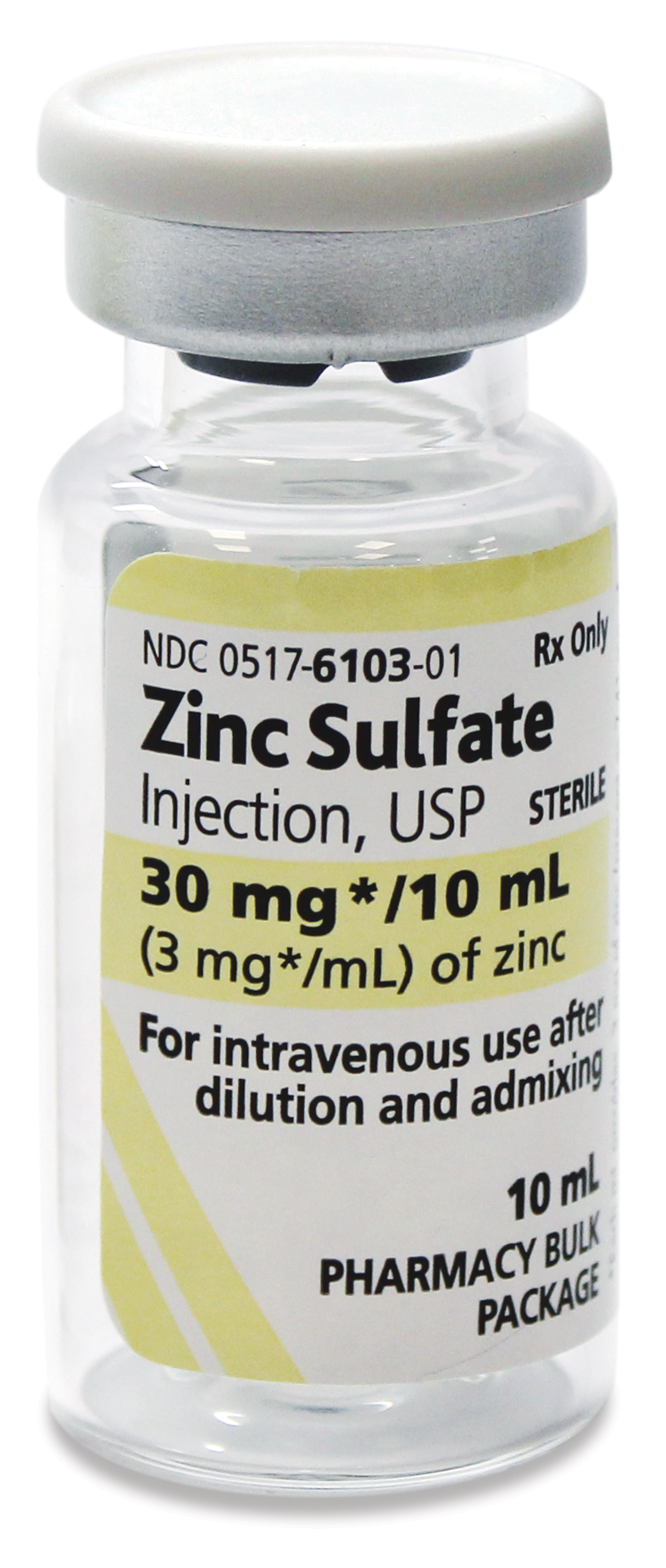
Product Label Full Prescribing Information Safety Data Sheet Wholesaler Numbers
Case Information
|
||||||||
|
Strength:
5 mg/mL Supplied As:5 mL |
0517-8005-25 |
5 mg/mL |
5 mL |
25 | 13 mm | Product Label Full Prescribing Information Safety Data Sheet | Out of Stock | |
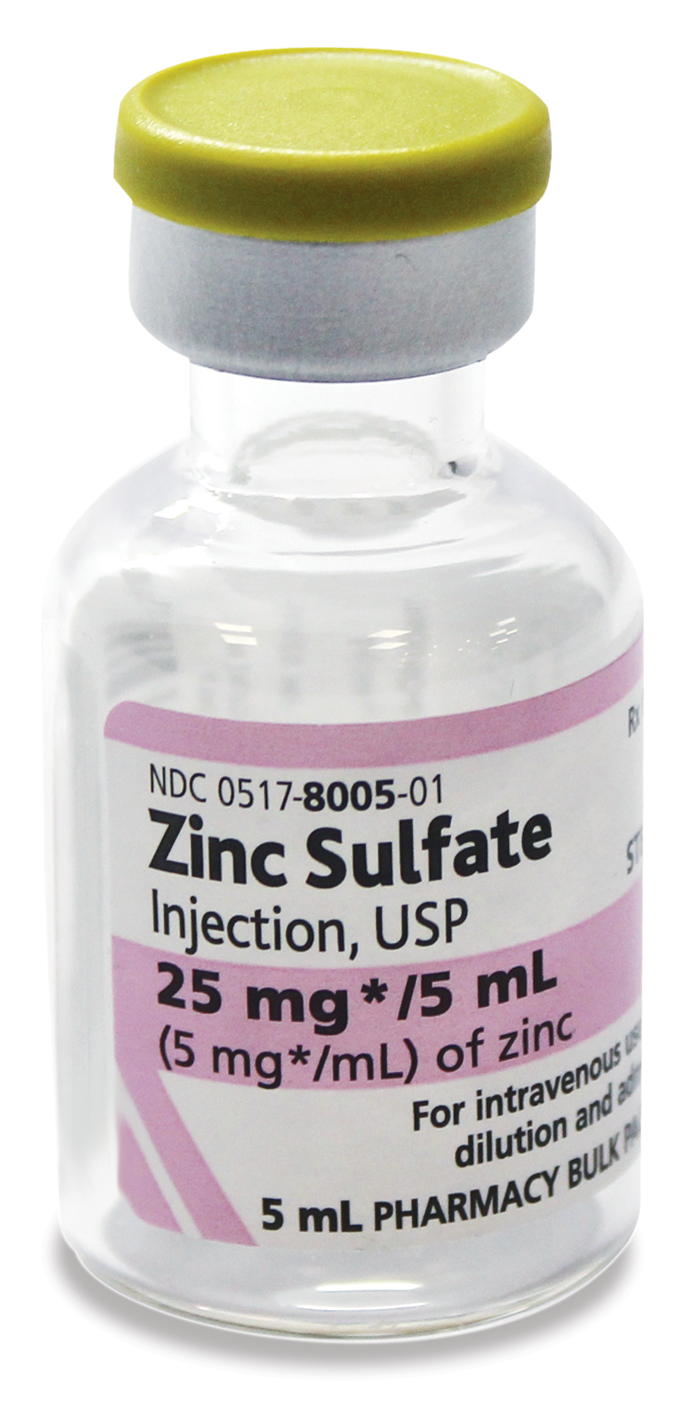
Product Label Full Prescribing Information Safety Data Sheet Wholesaler Numbers
Case Information
|
||||||||
|
Strength:
1 mg/mL Supplied As:10 mL |
0517-6101-25 |
1 mg/mL |
10 mL |
25 | 20 mm | Product Label Full Prescribing Information Safety Data Sheet | In-Stock Shipping Weekly | |
Product Label Full Prescribing Information Safety Data Sheet Wholesaler Numbers
Case Information
|
||||||||
Contact Us
By clicking Submit, you confirm that you accept our Privacy Policy and that you agree to your personal contact information being used to contact you and added to our database. If at any time you wish your personal information to be removed from the American Regent® database, please submit a message request to corpcommunications@americanregent.com.
For intravenous use after dilution and admixing. Not for direct intravenous infusion.
IMPORTANT SAFETY INFORMATION
CONTRAINDICATIONS
Zinc Sulfate Injection is contraindicated in patients with known hypersensitivity to zinc.
WARNINGS AND PRECAUTIONS
Pulmonary Embolism due to Pulmonary Vascular Precipitates: Pulmonary vascular precipitates causing pulmonary vascular emboli and pulmonary distress have been reported in patients receiving parenteral nutrition (PN). The cause of precipitate formation has not been determined in all cases; however, in some fatal cases, pulmonary emboli occurred as a result of calcium phosphate precipitates. Precipitation has occurred following passage through an in-line filter; in vivo precipitate formation may also have occurred. If signs of pulmonary distress occur, stop the infusion and initiate a medical evaluation. The infusion set and catheter should be checked periodically for precipitates.
Vein Damage and Thrombosis: Zinc Sulfate Injection has a low pH and must be prepared and used as an admixture in PN solutions. Solutions with osmolarity of 900 mOsm/L or more must be infused through a central venous catheter. The infusion of hypertonic nutrient solutions into a peripheral vein may result in vein irritation, vein damage, and/or thrombosis. The primary complication of peripheral access is venous thrombophlebitis, which manifests as pain, erythema, tenderness, or a palpable cord.
Aluminum Toxicity: Zinc Sulfate Injection contains aluminum that may be toxic. Aluminum may reach toxic levels with prolonged parenteral administration if kidney function is impaired. Preterm infants are particularly at risk for aluminum toxicity because their kidneys are immature, and they require large amounts of calcium and phosphate solutions, which also contain aluminum. Patients with impaired kidney function, including preterm infants, who receive greater than 4 to 5 mcg /kg /day of parenteral aluminum can accumulate aluminum at levels associated with central nervous system and bone toxicity. Tissue loading may occur at even lower rates of administration.
Monitoring and Laboratory Tests: Monitor Zinc concentrations, fluid and electrolyte status, serum osmolarity, blood glucose, liver and kidney function, blood count, and coagulation parameters throughout treatment.
Copper Deficiency: Several post marketing cases have reported that high doses of supplemental zinc (approximately 10 times the recommended dosage of 3 mg/day Zinc Sulfate Injection in adults) taken over extended periods of time (i.e., months to years) may result in decreased enteral copper absorption and copper deficiency. The cases reported the following complications of copper deficiency: anemia, leukopenia, thrombocytopenia, myeloneuropathy, and nephrotic-range proteinuria.
Hypersensitivity Reactions: Hypersensitivity reactions to subcutaneously administered zinc-containing insulin products were identified in postmarketing case reports. Reported reactions included injection site induration, erythema, pruritus, papular rash, generalized urticaria, facial swelling, and dyspnea. If hypersensitivity reactions occur, discontinue Zinc Sulfate Injection and initiate appropriate medical treatment.
ADVERSE REACTIONS
No zinc-related adverse reactions have been reported in clinical studies or postmarketing reports in patients receiving intravenously administered PN solutions containing zinc sulfate within the recommended dosage range.
USE IN SPECIFIC POPULATIONS
Pregnancy: Administration of the recommended dose of Zinc Sulfate Injection in PN is not expected to cause major birth defects, miscarriage, or adverse maternal or fetal outcomes.
Lactation: Zinc is present in human milk. There is no information on the effects of zinc sulfate on milk production. The developmental and health benefits of breastfeeding should be considered along with the mother’s clinical need for Zinc Sulfate Injection and any potential adverse effects on the breastfed infant from Zinc Sulfate Injection or from the underlying maternal condition.
Pediatric Use: Safety and dosing recommendations in pediatric patients are based on published literature describing controlled studies of zinc-containing products in pediatric patients. Because of immature renal function, preterm infants receiving prolonged parenteral nutrition treatment with Zinc Sulfate Injection may be at higher risk of aluminum toxicity.
Geriatric Use: Dose selection should be individualized based on the patient’s clinical condition, nutritional requirements, and additional nutritional intake provided orally or enterally to the patient.
OVERDOSAGE: There are reported cases of overdosage with intravenous zinc in parenteral nutrition.
INDICATIONS AND USAGE
Zinc Sulfate Injection is a trace element indicated in adult and pediatric patients as a source of zinc for parenteral nutrition when oral or enteral nutrition is not possible, insufficient, or contraindicated.
For additional safety information, please see Full Prescribing Information.
You are encouraged to report Adverse Drug Events to American Regent, Inc. at 1-800-734-9236 or to the FDA by visiting www.fda.gov/medwatch or calling 1-800-FDA-1088.
REF-1299 (v6.0) 10/2020